Understanding the 5 Biggest Food Safety Risk Areas—and How CFPM Training Addresses Them
Foodborne illness sends millions of people to seek medical care every year, and the majority of outbreaks trace back to a handful of preventable mistakes: sick or unwashed hands touching food, raw juices mixing with ready-to-eat items, food sitting too long in the temperature danger zone, and meat, poultry, or seafood that never reached a safe internal temperature.
According to the CDC, foodborne illness remains a significant public health concern in the U.S. each year, which is exactly why understanding the major food safety risk areas is so important.
Foodservice Safe’s CFPM program is built around these exact risk areas. Below is a breakdown of five core food safety topics and how the Foodservice Safe curriculum addresses each one.
1. Personal Health and Hygiene
Why It Matters
People are one of the most common sources of contamination in a kitchen. Bare-hand contact, poor handwashing, and working while sick are leading causes of foodborne illness outbreaks.
Key Practices
- Wash hands correctly and at the right times — before starting work, after using the restroom, after handling raw meat, after touching your face or hair, after taking out the trash, and after any activity that could contaminate hands.
- Use proper handwashing technique: Wet hands, apply soap, scrub for at least 10–15 seconds (including under nails and between fingers), rinse, and dry with a single-use towel. The entire handwashing process takes 20 seconds.
- Avoid bare-hand contact with ready-to-eat foods by using gloves, tongs, deli paper, or other utensils.
- Report illness. Staff who are experiencing vomiting, diarrhea, or jaundice, or who have been diagnosed with certain pathogens such as Norovirus, Hepatitis A, Salmonella, Shigella, or E. coli, must be excluded from food handling according to health department guidance.
- Manage personal habits such as wearing clean uniforms, restraining hair, avoiding jewelry on hands and arms, and not eating, drinking, or smoking in food preparation areas.
How Foodservice Safe Covers It
The CFPM course dedicates an entire module to “The Safe Food Handler,” walking through hand hygiene procedures step-by-step, the specific illnesses that require reporting to a manager, and the FDA’s guidelines on excluding or restricting sick employees.
The course also tests scenario-based judgment calls, such as identifying when an employee with a symptom must be sent home versus when they can continue working with restrictions.
2. Cross-Contamination
Why It Matters
Cross-contamination happens when harmful microorganisms are transferred from one surface, food, or person to another — most dangerously, from raw animal products to ready-to-eat food.
Key Practices
- Store raw meat, poultry, and seafood separately from ready-to-eat foods in the cooler, following the safe storage order: ready-to-eat foods on top, followed by whole cuts of beef and pork, ground meats, and poultry or ground poultry at the bottom based on required cooking temperatures.
- Use separate cutting boards, knives, and preparation surfaces for raw proteins versus produce and ready-to-eat items. Many operations use color-coded equipment.
- Wash, rinse, and sanitize all food-contact surfaces and equipment between tasks.
- Prevent contamination during purchasing, receiving, and storage by inspecting deliveries for damage or temperature abuse before accepting them.
- Practice good hand hygiene and change gloves between handling different food types.
How Foodservice Safe Covers It
Foodservice Safe frames cross-contamination as part of “The Flow of Food,” tracing how contamination risk moves through purchasing, receiving, storage, preparation, and service.
The course teaches:
- The correct cooler storage hierarchy based on minimum cooking temperature
- The “clean and sanitize” four-step process: wash, rinse, sanitize, and air dry
- How to separate raw and ready-to-eat items at every stage
- How to identify cross-contamination hazards in real-world kitchen scenarios
Practice questions often test whether a trainee can correctly sequence food storage in a refrigerator or identify a cross-contamination hazard in a described kitchen scenario.
3. Keeping Hot Foods Hot
Why It Matters
Bacteria multiply rapidly in the temperature danger zone (41°F–135°F / 5°C–57°C). Holding hot food below 135°F for extended periods gives pathogens room to grow.
Key Practices
- Hold hot food at 135°F (57°C) or above at all times during service.
- Check temperatures regularly, typically every 2–4 hours, using a calibrated thermometer and logging results.
- Use approved hot-holding equipment such as steam tables and warmers. Never use hot-holding equipment to cook or reheat food; it should only be used to maintain temperature.
- Reheat food to 165°F (74°C) for 15 seconds within 2 hours before placing it into hot holding.
- Discard or rework food that has fallen outside the safe temperature range beyond allowed time limits.
How Foodservice Safe Covers It
The course’s temperature control module explains the danger zone, the 2-hour/4-hour rule for time as a public health control, and the specific holding and reheating temperatures required by the FDA Food Code.
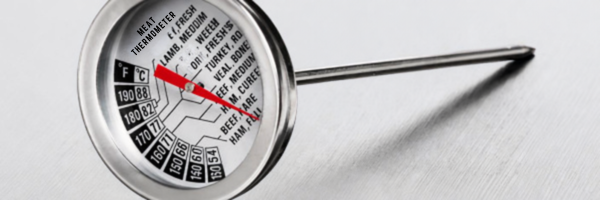
Students learn how to use and calibrate thermometers correctly, including:
- Bimetallic stemmed thermometers
- Thermocouples
- Infrared thermometers
The course also teaches managers how to build monitoring routines — including checks, logs, and corrective actions — into daily operations.
Exam questions may present a holding temperature and time scenario and ask the trainee to identify the appropriate corrective action.
4. Cooking Foods Correctly
Why It Matters
Cooking food to the correct internal temperature for the correct amount of time is the primary “kill step” that destroys pathogens in raw food.
Undercooking is one of the top causes of foodborne illness associated with menu items such as poultry, ground meat, and eggs.
Key Minimum Internal Temperatures Taught in the Course
- Poultry (whole, ground, or parts): 165°F (74°C) for 1 second
- Ground meats (beef, pork, and other meats) and injected meats: 155°F (68°C) for 17 seconds
- Whole cuts of beef, pork, veal, and lamb (steaks/chops): 145°F (63°C) for 15 seconds
- Fish and shellfish: 145°F (63°C) for 15 seconds
- Eggs for immediate service: 145°F (63°C) for 15 seconds
- Roasts (beef and pork): 145°F (63°C) for 4 minutes
- Reheated food for hot holding: 165°F (74°C) for 15 seconds
Key Practices
- Always verify temperature with a calibrated food thermometer inserted into the thickest part of the food, avoiding bone and fat.
- Allow required hold times at temperature for certain foods, rather than simply reaching the required temperature momentarily.
- Never partially cook food and finish it later unless following an approved procedure.
- Understand microwave cooking requirements. Raw animal foods cooked in a microwave must reach a higher temperature of 165°F because of uneven heating.
How Foodservice Safe Covers It
Foodservice Safe provides a full reference chart of minimum internal cooking temperatures and required hold times for major food categories.
The course explains why each temperature threshold exists, including the relationship to pathogens such as Salmonella and E. coli O157:H7, how to use thermometers correctly, and how cooking requirements change for methods such as microwaving.
Students also learn about cooling procedures using the two-stage cooling method: 135°F to 70°F within 2 hours, then to 41°F or below within 4 more hours as the reverse companion process to cooking.
5. Purchasing from an Approved Source
Why Buying from an Approved Source Matters
Food safety doesn’t start in the kitchen — it starts with the supplier.
An “approved source” is a food supplier that has been inspected and regulated by the appropriate government authority, such as the USDA, FDA, or state and local health departments, depending on the product.
If a business buys from an unapproved source — such as a roadside seller, an unlicensed home producer, unpasteurized dairy sold informally, game meat that hasn’t been inspected, or shellfish without proper harvest documentation — that verification does not exist.
A kitchen can do everything else right and still serve contaminated food because the hazard was present before the product ever arrived.
This is especially important for high-risk foods such as:
- Raw meat
- Poultry
- Seafood
- Eggs
- Dairy products
Pathogens such as Salmonella, E. coli, Listeria, and Vibrio can originate at the source rather than develop in-house.
Approved sourcing also creates accountability. If a foodborne illness outbreak is traced back to a product, an approved, licensed supplier can be identified, traced, and recalled. An unapproved source may not be traceable, making it much more difficult to contain an outbreak.
How Foodservice Safe Covers It
Foodservice Safe positions purchasing from approved sources as the first control point in the “Flow of Food,” taught early in the course before receiving, storage, preparation, cooking, or service.
Specific topics covered include:
- Definition and criteria: What makes a supplier “approved,” including regulatory inspection, proper permits and licenses, and a track record that can be verified or audited.
- Shellfish tagging: Molluscan shellfish such as oysters, clams, and mussels must come with a shellfish identification tag, and the operation must keep that tag on file for 90 days from the sale or service date.
- Receiving as verification: The course ties approved-source purchasing directly to the receiving process. Staff learn to verify that deliveries match what was ordered from the approved supplier, check temperatures upon arrival, inspect packaging for damage or tampering, and reject anything that does not meet requirements.
The core lesson Foodservice Safe drives home is that a manager’s food safety responsibility begins before the food is even unloaded from the truck.
Purchasing decisions are just as much a food safety control as cooking temperature or handwashing.
Why This Structure Matters
These five areas — personal hygiene, cross-contamination, hot-holding, cooking temperatures, and purchasing from an approved source — map directly onto what food safety professionals call the “Flow of Food”: the path food takes from receiving through serving.
Foodservice Safe mirrors the actual points in a kitchen’s workflow where contamination or bacterial growth is most likely to occur, training managers to identify hazards and intervene at each critical point.
Ready to Prepare Your Team?
Ready to make sure your whole team is prepared?
