
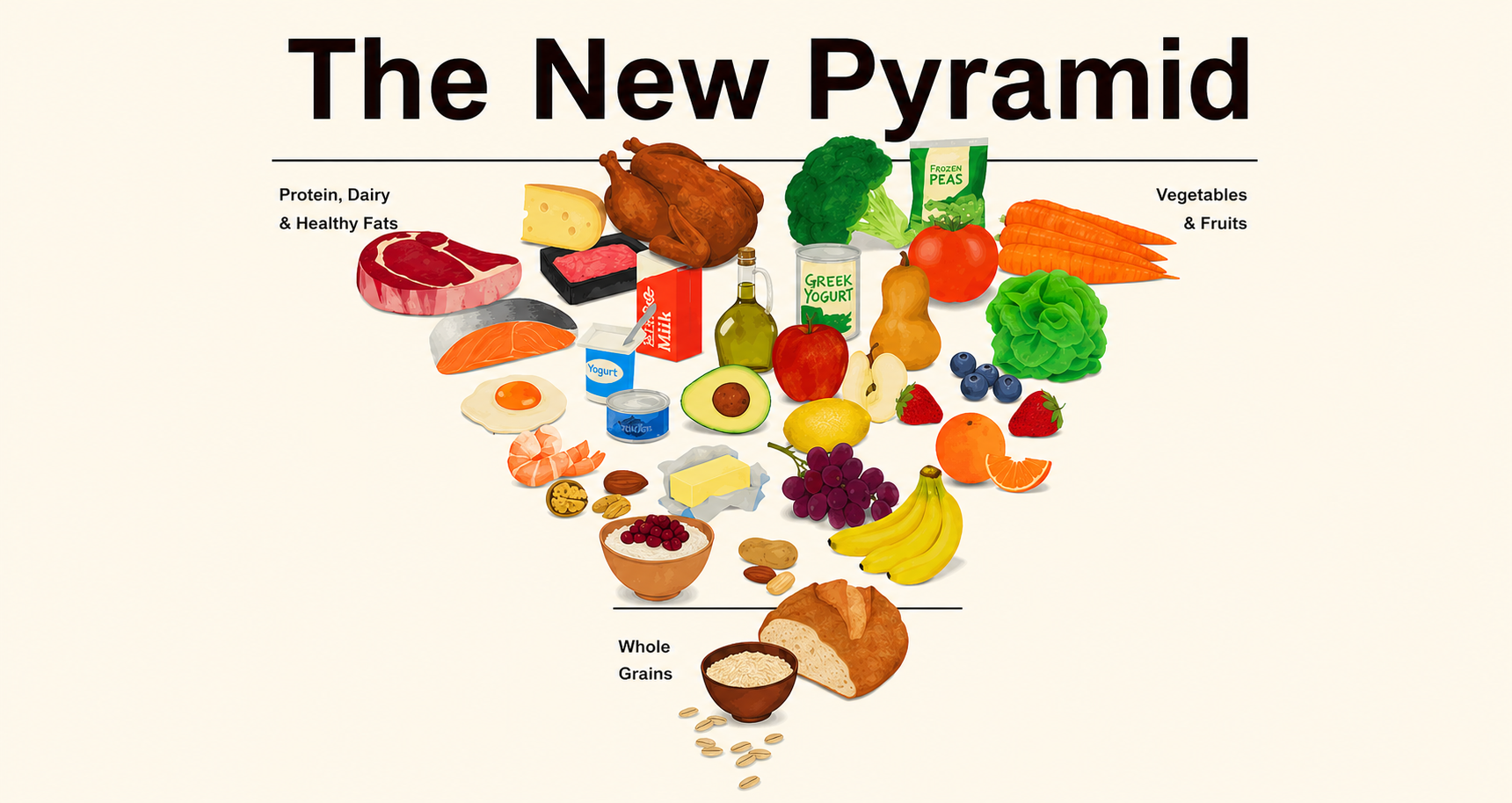
At a Glance: 2025–2030 Dietary Guidelines for Americans
The 2025 Dietary Guidelines for Americans mark one of the most significant shifts in federal nutrition policy in decades — moving firmly toward whole, minimally processed foods and away from the low-fat, grain-heavy guidance of the past. Here’s what you need to know.
Key Recommendations from the 2025 Dietary Guidelines for Americans
1. Prioritize Protein at Every Meal Include high-quality protein sources such as meat, poultry, seafood, eggs, beans, nuts, seeds, and soy. The new guidelines also raise the recommended protein target to 1.2–1.6 grams per kilogram of body weight — a meaningful increase from prior guidance.
2. Embrace Whole, Nutrient-Dense Foods Focus on minimally processed options: fruits, vegetables, whole grains, and healthy fats from whole food sources like avocados, nuts, meats, and seafood.
3. Limit Highly Processed Foods This is the first edition of the guidelines to explicitly label highly processed foods as a public health concern — including refined grains, added sugars, and artificial additives.
4. Choose Water First Make water and unsweetened beverages your primary drinks throughout the day.
5. Full-Fat Dairy Is In In a notable reversal, the guidelines now recommend full-fat dairy products with no added sugars, stepping away from decades of low-fat dairy promotion.
6. Stricter Added Sugar Limits Limit added sugars to less than 10 grams per meal for most people — and to zero for children under age 4.
7. Healthier Cooking Methods Baking, roasting, grilling, and stir-frying are preferred over methods that introduce excess fat, sodium, or chemical byproducts.
8. Limit Alcohol The guidelines continue to advise limiting alcohol consumption to support overall health.
What Makes These Guidelines Different
Four shifts stand out in this edition:
- Processed foods named directly — the first time federal guidelines have explicitly flagged ultra-processed foods as a concern
- Protein guidance updated — higher targets reflect growing evidence around protein’s role in metabolic health and satiety
- Full-fat dairy rehabilitated — research no longer supports the link between full-fat dairy and poor cardiovascular outcomes
- Added sugar policy strengthened — “no amount” of added sugar is recommended for children under 4
Why This Matters for Foodservice
For restaurant operators and food service managers, these guidelines carry real weight. Federal nutrition programs — from school lunches to workplace wellness initiatives — are shaped directly by this framework. Understanding the direction of national nutrition policy helps operators make smarter menu decisions and better serve their guests.
Food safety and nutrition go hand in hand: keeping food safe is the foundation of keeping food healthful. Learn more about food safety certification at Foodservice Safe and explore our CFPM certification program for your team.
Sources
- U.S. Department of Agriculture & U.S. Department of Health and Human Services (2025). Dietary Guidelines for Americans, 2025–2030 — dietaryguidelines.gov
- U.S. Department of Agriculture (2025). MyPlate Nutrition Guidelines — myplate.gov
